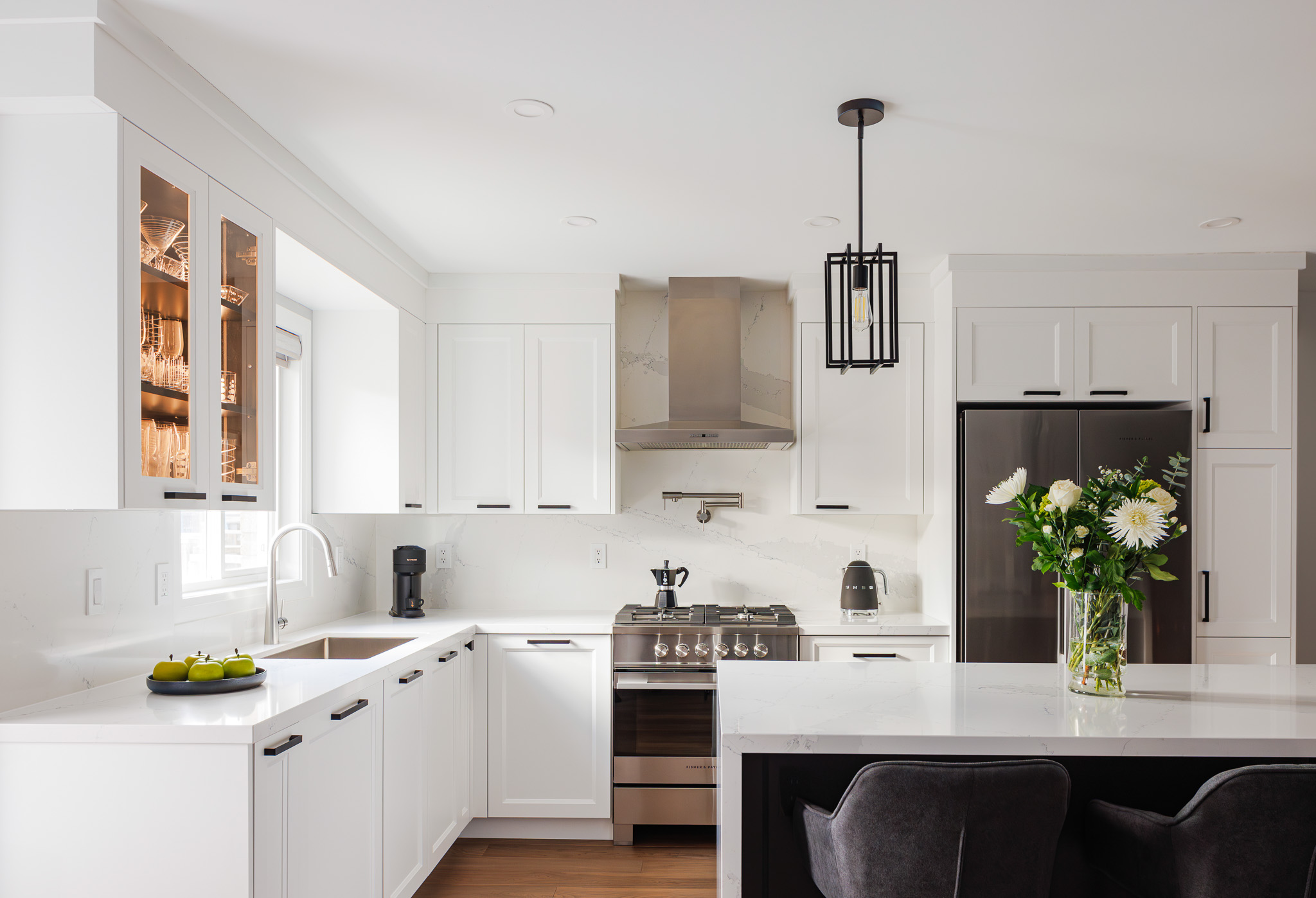
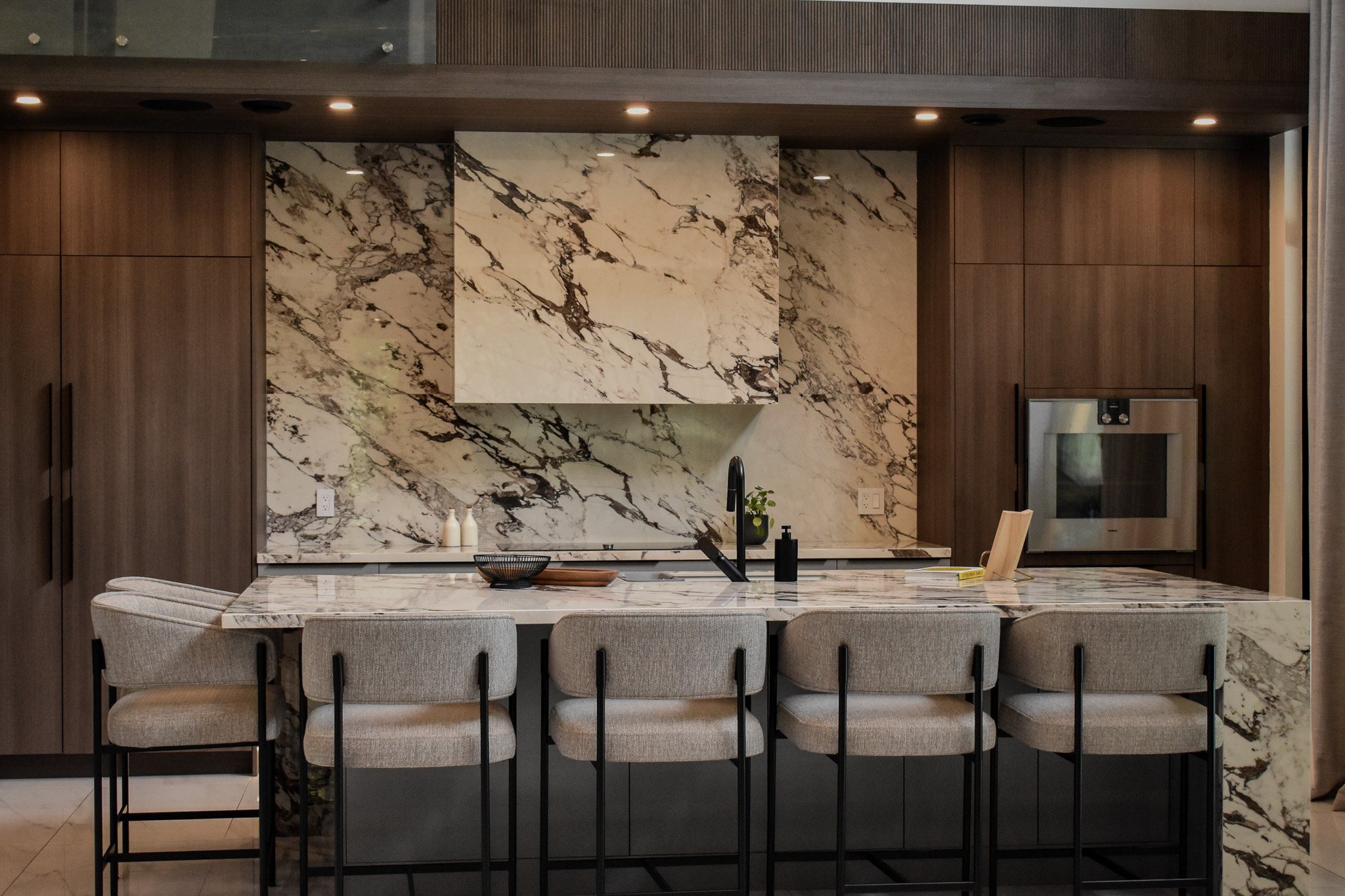
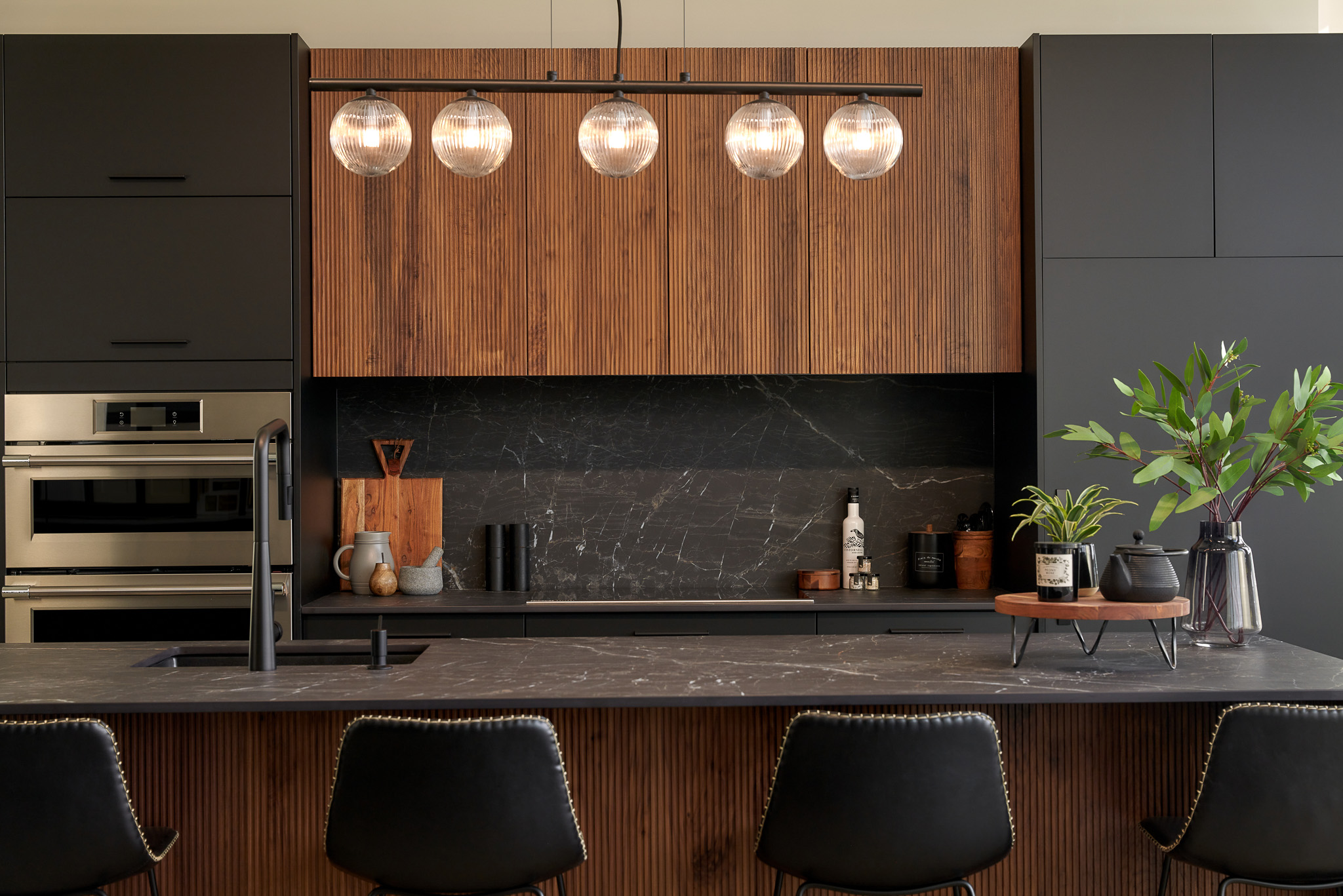
Choosing thebest wood for kitchen cabinetsinfluences every other decision in your project. The wood species for your kitchen cabinets determines how solid wood cabinets age, take stain or paint, resist daily wear, and feel to the touch. From maple to red oak to walnut, the right type of wood for kitchen cabinets depends on your style, budget, and how you live in your kitchen every day.
This guide is based on over fifty years of cabinetmaking expertise regarding the wood species for kitchen cabinets that truly matter.
Why the wood species you choose defines your kitchen cabinets
The wood species you choose is the foundation of your custom kitchen cabinets. It dictates the grain pattern you see, the depth of color your finish reveals, and how the cabinets withstand decades of daily use. A seasoned cabinetmaker approaches wood selection as the very first conversation with a client, because every choice that follows, from stained to painted cabinets, builds upon this initial decision. The beauty and aesthetic appeal of a kitchen always start with the wood.
Cuisine Idéale, cabinetmakers since 1971, has delivered 250,000 luxury cabinets across North America, crafted in-house by teams of master cabinetmakers using hardwood sourced from forestry partners committed to sustainability and eco-responsibility. The right wood, properly finished and easy to repair, refined soft-close hardware, and timeless craftsmanship are what distinguish a beautiful kitchen from an exceptional one.
Durability, grain pattern, and daily use
The kitchen is the most used room in the house. Cabinets must withstand heat, humidity, daily use, and the impact of dropped pots. Choosing a wood with the right density and grain pattern makes all the difference between functionality that lasts and functionality that shows signs of wear after only a few years. A well-executed finish allows the color to darken gradually, without uneven spots or peeling.
Hardwood species likered oak, maple, cherry, and walnutare the gold standard because they resist scratches, dents, and moisture damage much better than softwoods. The Janka hardness rating, an industry-standard measure of wood density, quantifies this:
Hickory:among the hardest commercial hardwoods, with a pronounced grain and exceptional impact resistance
Hard Maple:dense, closed-grain, excellent for high-traffic kitchens
Red Oak and White Oak:strong, open-grain, traditional, and versatile
Cherry and walnut:softer than oak but rich in character, perfect for refined applications
Open-grain woods like oak display a pronounced texture; closed-grain species like maple and cherry offer a smoother surface. Both have their place.
How wood influences stain, paint, and finish
Every wood species absorbs stain, paint, and lacquer differently. A finish that looks rich on walnut may result in a blotchy appearance on cherry, and a white paint that sits flat on maple may look uneven on red oak due to how its open grain absorbs pigments, including warmer golden tones.
The wood-to-finish relationship matters as much as the species itself. Closed-grain woods accept painted finishes cleanly. Open-grain species take dark stains beautifully but require careful sanding and sealing to maintain a smooth paint job. Special cuts like rift-sawing produce a straighter grain when you want to customize high-end wood for contemporary-style cabinets. Our guide oncabinet door types and profilesexplains how door style and finish work together once the wood is chosen.
The best hardwood species for kitchen cabinets
When homeowners ask what thebest wood for kitchen cabinetsis, they are really thinking of four species: oak, maple, cherry, and walnut. These hardwoods form the backbone of almost every high-end kitchen in North America and remain the most popular woods for kitchen cabinets among designers, contractors, and luxury cabinet specialists. Each brings character, durability, and a surface that accepts stain, paint, glaze, and hand-applied lacquer.
The comparison below presents the best wood species according to cabinet material.
Red oak and white oak cabinets — Strength and pronounced grain
Oak is the gold standard for hardwood in North American cabinetry.Red oakfeatures a warm reddish-brown hue and a pronounced grain that gives traditional kitchens their classic look.White Oakis paler, with a straighter grain that has made it a favorite for modern and transitional designs, especially in its rift-sawn version.
Both species are strong, dense, and forgiving for daily use. They take stain beautifully, from clear natural finishes to deep espresso tones. Oak is also one of the easiest woods to refinish on the market: even after years of use, the surface can be sanded and refinished to look brand new. For homeowners inSherbrookewho are renovating heritage homes, oak often stands out as a natural choice.
Maple cabinets — A refined canvas for paint and stain
Maple is the most versatile species in a cabinetmaker's palette. Its uniform pale hue and fine, closed grain make it the cleanest canvas for painted cabinets. White paint on maple lays down flat, smooth, and even, without the grain transparency that marks open-grain species.
Maple also takes stain very well, though differently than oak. A light stain reveals its natural character; a dark stain delivers a rich, uniform tone without the grain interruptions found in oak or hickory. This versatility makes it a favorite for contemporary kitchens where the cabinet front reads as a clean, non-textured surface. Cuisine Idéale’s hard maple accommodates the brand’s hand-applied lacquer finishes, including signature colors like Winter Lake, Natural, and Caviar.
Cherry Cabinets — A luxurious wood that enriches with time
Cherry is the romantic hardwood. Cherry wood starts out pinkish-brown and, over time, undergoes a natural oxidation and aging process that enriches it into a warm, deep reddish-brown patina. No other common cabinet wood ages quite like it.
A cherry kitchen will look different at ten years than it does at one, and this evolution is part of its charm.
The grain is closed and fine, the surface is smooth, and the finished result exudes effortless elegance. Cherry is beautifully suited to traditional and refined kitchens — which is also why it remains a popular choice forkitchen cabinets in Brossardand in markets where heritage home renovations call for warmth and timelessness. A note for Quebec buyers:yellow birchis also very common in Quebec and offers a fine, nuanced grain similar to cherry.
Walnut Cabinets — Dark, elegant, and high-end
Walnut is the most luxurious of common North American hardwoods and the species most associated with high-end kitchen cabinetry. Its naturally dark chocolate-brown tone, straight and smooth grain, and subtle figuring give walnut a depth that no stain on a lighter wood can quite replicate.
Walnut is softer than maple or oak, but its density remains adequate for cabinetry, and its visual impact is unmatched. It is the go-to species for the spectacular modern luxury kitchens that define the high-end renovation market in cities likeLaval. Walnut also pairs beautifully with brass or matte black hardware.
See these wood species in Cuisine Idéale’s custom kitchens
Wood species don't look the same on screen as they do in person.Browse our Inspiration Cornerto see how oak, maple, cherry, and walnut come to life in our completed projects.
Beyond the four flagship species, several other woods find their place in custom kitchen cabinetry. Each fills a specific niche—rugged durability, accessible pricing for painted cabinets, or a distinctive grain for designers seeking a particular visual signature.
Hickory cabinets — Rugged durability for active kitchens
Hickory is among the hardest cabinet-grade woods available, making it virtually impervious to dents and scratches. It features the most dramatic color variation of any North American hardwood, with each board ranging from pale cream to light brown to deep dark brown, sometimes within a single piece.
This variation is part of hickory's appeal in rustic and farmhouse-style kitchens, and it makes it a smart choice for busy households. Because of its porous and variable density, hickory does not absorb stain as uniformly as maple or oak; most cabinetmakers therefore use a clear finish or a light stain to let the natural color shine through.
Birch, alder, and poplar — Affordable woods for painted cabinets
When the goal is to achieve beautiful painted cabinets at a more accessible price,birch, alder, and rustic alderare the species cabinetmakers turn to. Birch offers a closed grain similar to maple, at a lower cost. Alder is softer, with a warm honey tone and occasional knots that give it character in rustic and artisanal applications. Poplar is the most affordable wood for cabinets when the surface will be painted, as its pale color and tight grain disappear under the coverage.
These species do not match high-end hardwoods in terms of longevity or refinishing potential, but for painted cabinet projects, they offer smart value.
Rift-sawn white oak and exotic woods for custom kitchens
For designers aiming for a precise aesthetic, the list of species expands further.Rift-sawn white oak, cut at a specific angle relative to the log, produces a straight, linear grain that has become a signature of modern luxury kitchens. Figured walnut, mahogany, and bamboo also appear in custom kitchen projects where artisanal precision and the uniqueness of the material are integral to the mandate. Special cuts increase the cost per linear foot, but deliver cabinet doors with distinctive character, hand-worked details, and visual impact.
These choices dominate where a contemporary aesthetic reigns — such as in modern kitchens where light wood cabinets pair with Cuisine Idéale finishes like Winter Lake and Natural. Every custom cabinet project begins with construction tailored to the space. Discoverthe full range of Cuisine Idéale species and finishesto explore all the possibilities.
Solid wood vs. plywood, MDF, and veneer — Understanding cabinet construction
When people ask what the best wood for kitchen cabinets is, they are usually thinking of the facade: the cabinet doors and drawer fronts that the eye sees. But what lies behind those fronts matters just as much. A custom cabinet from a kitchen renovation is rarely made entirely of solid wood. It is a careful combination of cabinet materials, each used where it performs best.
Why solid wood cabinets are the high-end choice
Solid wood is the premium choice for cabinet doors, drawer fronts, and exposed frames. It offers the richest grain, the deepest finish absorption, and the strongest assembly, including the dovetail joints on drawer boxes that signal true craftsmanship. Solid wood lasts over time in a way that engineered materials cannot match, and it can be sanded and refinished decades after installation.
The trade-off: solid wood expands and contracts with humidity; managing this movement is part of any high-end construction. A seasoned cabinetmaker and a skilled contractor account for these forces through panel construction, hardware tolerances, and the choice of finish. A showroom visit makes the difference tangible: you can see how the assembly and finish hold up, and how easy the cabinets are to maintain.
When plywood, MDF, and veneer make perfect sense
Behind the solid wood facade, most high-end custom cabinets use plywood for the cabinet boxes because plywood is dimensionally stable, strong, and resistant to warping.MDF(medium-density fiberboard) and HDF (high-density fiberboard) are engineered wood products used for painted door panels, as their uniform surface accepts paint without grain telegraphing. Veneer, a thin slice of real wood applied to a stable substrate, allows for the integration of exotic wood species on door fronts, often with a glaze or transitional finish applied over the top.
Engineered materials like particleboard, melamine, and thermofoil have their place in entry-level cabinetry, but high-end manufacturers rely on plywood and MDF paired with premium wood fronts.
Discuss your custom cabinet project with Cuisine Idéale
Every custom cabinet project begins with a conversation.Whether you are renovating inMirabel, inPointe-Claireor elsewhere in Quebec, our team will help you choose the wood species and construction that are right for your project.
How to choose the best wood for your custom kitchen cabinets
Choosing wood for your kitchen cabinets is about balancing three things: kitchen style, daily use, and budget. Every homeowner starts out focused on color and finish, but it is the wood species itself that quietly shapes everything else. The best wood for cabinets is the one that meets all three criteria together.
Matching wood species to your kitchen style
Different kitchen styles call for different woods, and the best wood for traditional kitchens is rarely the best wood for modern or rustic kitchens. The combinations below reflect the most common style-species choices our designers make with their clients:
Traditional kitchens: cherry, red oak, and maple in glazed or stained finishes
Transitional kitchens: white oak, rift-sawn white oak, and maple in light stains or paints
Modern and contemporary kitchens: walnut, rift-sawn white oak, and painted maple in matte lacquers
Rustic and farmhouse kitchens: hickory, alder, and knotty oak in natural or light-stained finishes
Minimalist kitchens: walnut or rift-sawn white oak veneer with no visible hardware
For inspiration on current design directions, our overview of kitchen cabinet trends covers the colors, materials, and styles shaping the year ahead.
Budget, maintenance, and long-term value
Choosing wood has real cost implications. Maple and oak sit at the accessible end of the high-end spectrum. Cherry and walnut command higher prices due to their slower growth, limited availability, and luxurious appearance. Hickory falls in the middle.
The smartest budget conversation focuses on the cost per year of ownership. A well-maintained, high-end hardwood kitchen can last fifty years or more, while lower-end options may require replacement in fifteen. For a complete picture of How much do kitchen cabinets cost in 2026?, our pricing guide walks you through the numbers.
Schedule a consultation with a master cabinetmaker
Your kitchen deserves expert advice. Connect with a Cuisine Idéale designer to schedule a consultation, review wood samples, and start shaping your custom project.
Frequently asked questions about wood for kitchen cabinets
What is the most durable wood for kitchen cabinets?
Hickory is the hardest commercial cabinet wood, followed by hard maple and white oak. All three resist scratches, dents, and daily wear exceptionally well. For high-traffic kitchens, hard maple is the most popular choice because it combines durability with a smooth, refined surface.
What is the best wood for painted cabinets?
Maple is widely considered the best wood for painted cabinets. Its closed grain, light color, and dense surface allow paint to lay down smoothly without the grain texture showing through. Birch and poplar are solid, more affordable options when the wood will be completely covered.
What is the best wood for luxury or high-end kitchen cabinets?
Walnut is most associated with high-end kitchen cabinets, thanks to its naturally dark, luxurious tone and refined, straight grain. Cherry, rift-sawn white oak, and figured maple veneers also appear regularly in luxury kitchen projects.
Are solid wood cabinets worth the investment?
Yes. Solid wood cabinets are a long-term investment that pays off in durability, refinishing potential, and resale value. A well-maintained, high-end hardwood kitchen can last fifty years or more. Combine the right wood with smart kitchen cabinet organization, and the investment delivers daily value for decades.
Bring your vision for custom kitchen cabinets to life with Cuisine Idéale
The right wood is the foundation of a kitchen you will love for decades. From the warm patina of cherry to the bold grain of red oak, every species in the Cuisine Idéale range is selected, crafted, and finished by master cabinetmakers in Sherbrooke, Quebec, drawing on a 50-year heritage of craftsmanship traditions. Entry-level options cannot compete with the refinement, elegance, and repairability of high-end hardwood.
Choose the wood, and the rest of your kitchen will follow naturally.
Whether your project is a complete renovation, a new build, or just an initial conversation with a designer, we are here to bring your vision to life.
Découvrez les plus récents articles de Cuisine Idéale : tendances émergentes, conseils de designers, projets inspirants et idées pour imaginer des espaces qui vous ressemblent.
Discover
10 January’2024
An architect's perspective on design and construction.
Discover
10 January’2024
Architectural ideas, developments, and motivation.
Discover
10 January’2024
The modern architecture art of design and structure.