Kitchen cabinets represent the largest investment in any kitchen renovation, typically accounting for 40 to 50 percent of the total project cost. Whether you are refreshing a small galley kitchen or designing a vast open-concept layout with a central island, understanding how much kitchen cabinets cost is the first essential step toward a realistic budget.
In 2026, homeowners across the United States can expect to spend anywhere from $3,000 for standard pre-fabricated kitchen cabinets to well over $50,000 for luxury custom cabinets made from premium hardwoods with bespoke finishes. The price you pay depends on a combination of factors: cabinet type, materials, door style, kitchen size, installation complexity, and geographic location.
According to the NKBA 2025 Kitchen & Bath Market Outlook, residential spending on kitchens and bathrooms in the United States reached $235 billion, with professional-led renovation projects continuing to outperform DIY projects. This guide details every element that influences the price of kitchen cabinets so you can make informed decisions and invest wisely in the heart of your home.
What determines the cost of kitchen cabinets?
No two kitchen cabinet projects carry the same price tag. The cost of kitchen cabinets is influenced by four main factors: the type of cabinet you choose, the materials and wood species used, the door style and design details, and the size and layout of your kitchen. Each of these variables can significantly alter your budget.
Cabinet Type – Stock, Semi-Custom, and Custom
Cabinet type is the primary factor determining the price of kitchen cabinets. Stock kitchen cabinets are pre-manufactured in set dimensions and finishes, offering the most affordable entry point at approximately $100 to $400 per linear foot installed. They are suitable for simple layouts but offer limited customization.
Semi-custom cabinets introduce more flexibility regarding dimensions, door style, finish, and interior configuration. Expect to pay between $150 and $700 per linear foot. This category is suitable for homeowners who want a tailored look without fully custom fabrication.
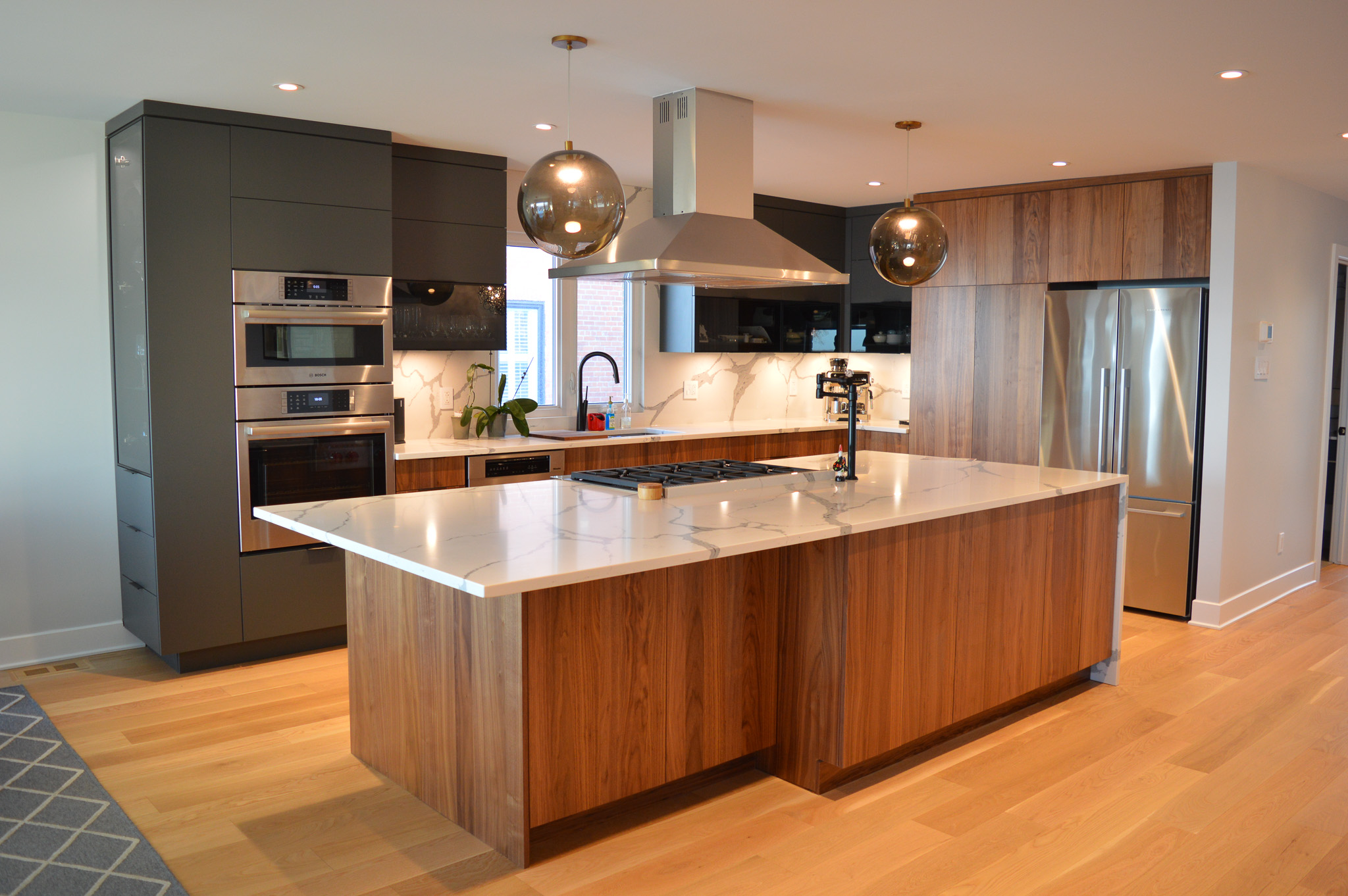
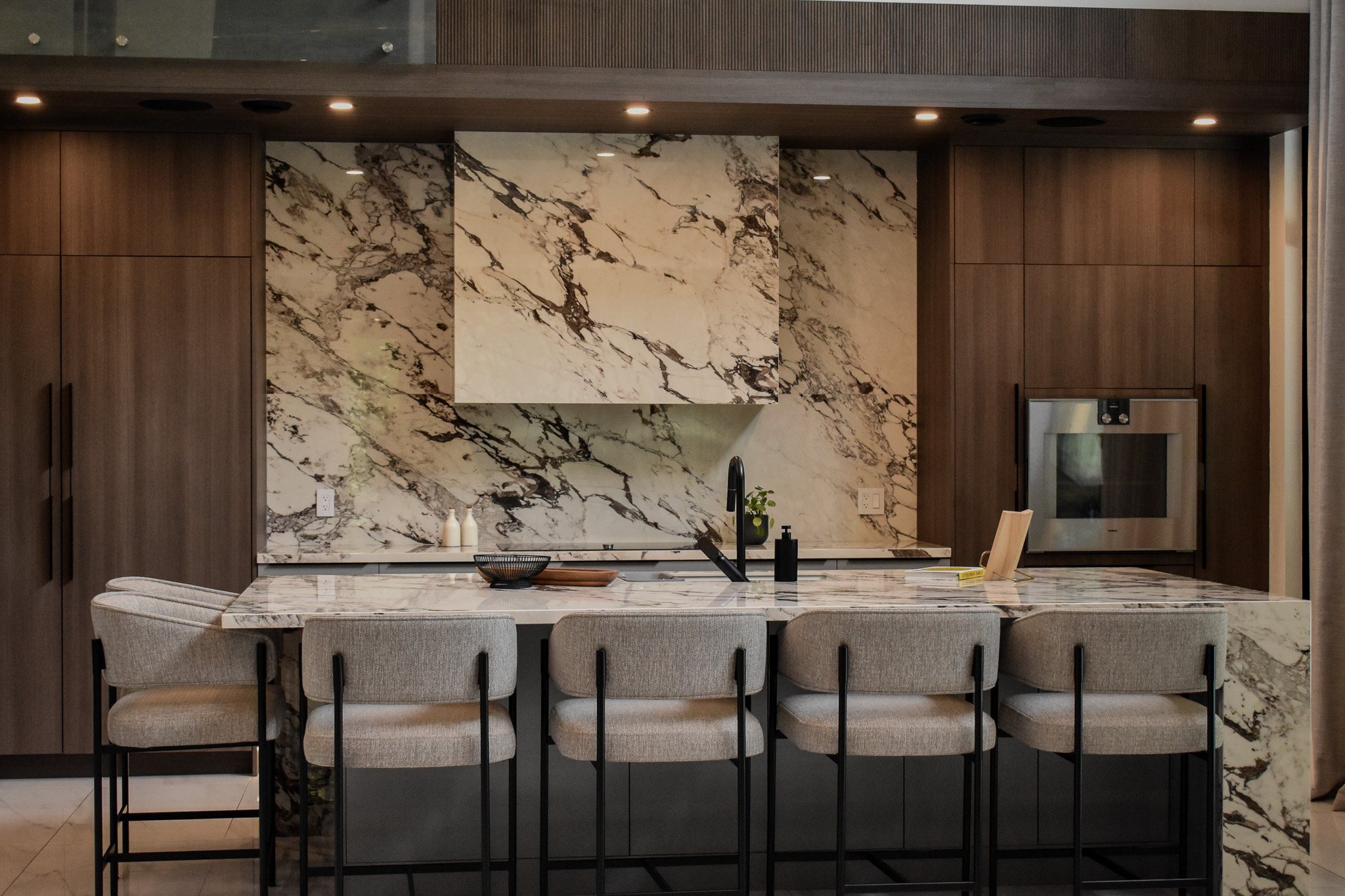
Custom kitchen cabinets are designed and built to the exact dimensions and specifications of your space. The price typically ranges from $500 to $1,200 or more per linear foot, reflecting the craftsmanship, precision engineering, and premium materials involved. For high-end luxury cabinetry—think solid walnut construction, hand-applied lacquer finishes, and integrated LED lighting with soft-close hardware—costs can exceed $1,500 per linear foot. Manufacturers like Cuisine Idéale have specialized in this segment for over five decades, creating custom kitchens from premium hardwoods in their North American workshops.
Materials and Wood Species
The material used for cabinet boxes, doors, and drawer fronts has a direct impact on cost and longevity. Particleboard and medium-density fiberboard (MDF) are at the lower end of the price scale and are common in stock and ready-to-assemble (RTA) cabinets. Plywood offers a notable upgrade in terms of durability, moisture resistance, and structural integrity.
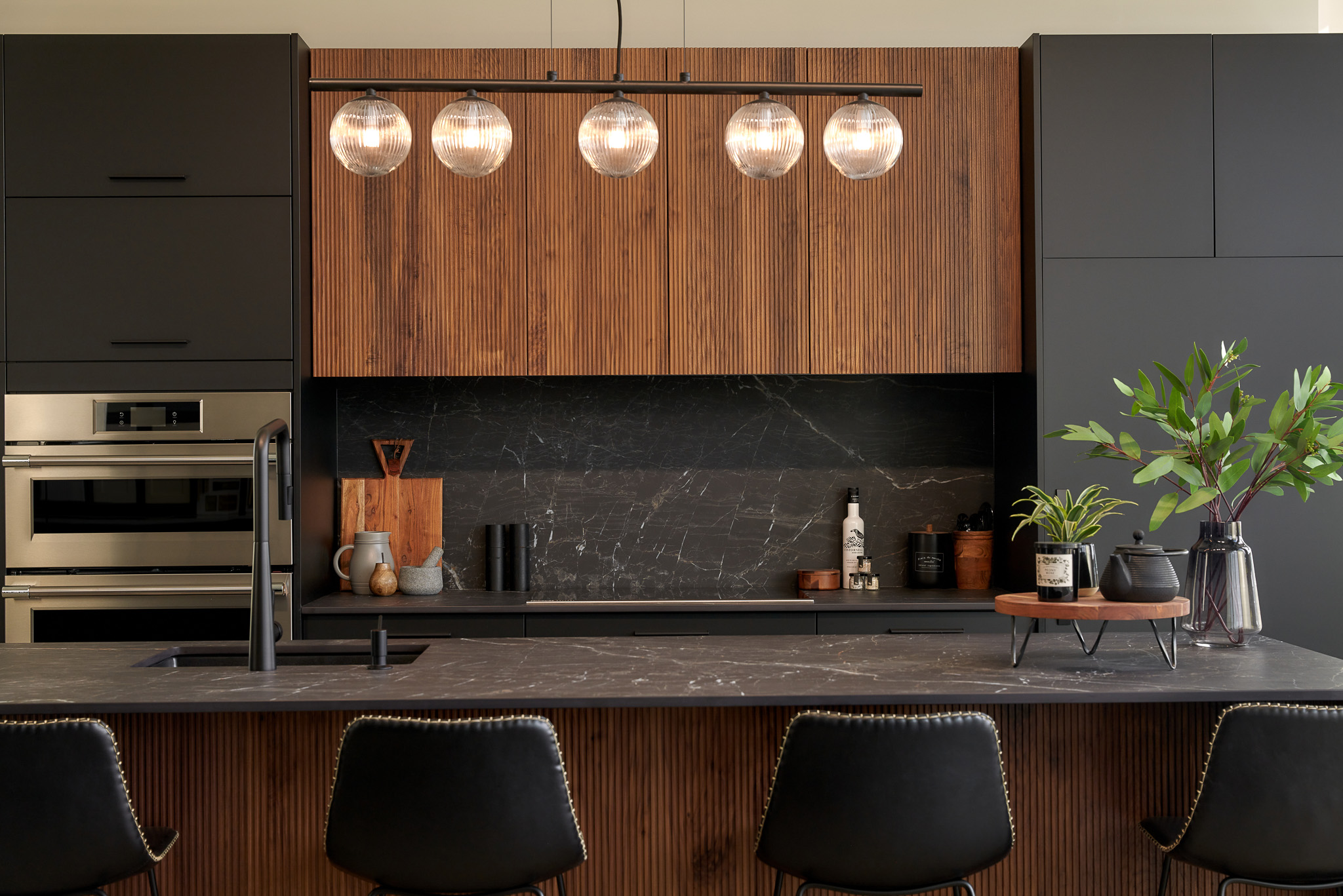
Solid hardwood commands the highest prices but offers unmatched beauty and longevity. Red oak and maple remain popular choices for their strength and versatility, while walnut is a premium selection prized for its rich grain and deep, warm tones. Exotic or highly sought-after species like quarter-sawn white oak can carry a 30 to 40 percent premium over standard hardwoods.
The type of finish also influences material costs. Painted finishes, stained finishes, and hand-applied lacquers each involve different labor requirements and price points. A multi-step lacquer finish requires more time and expertise than a simple stain, but the result is a depth and smoothness that elevates the entire kitchen.
Cabinet Style and Door Design
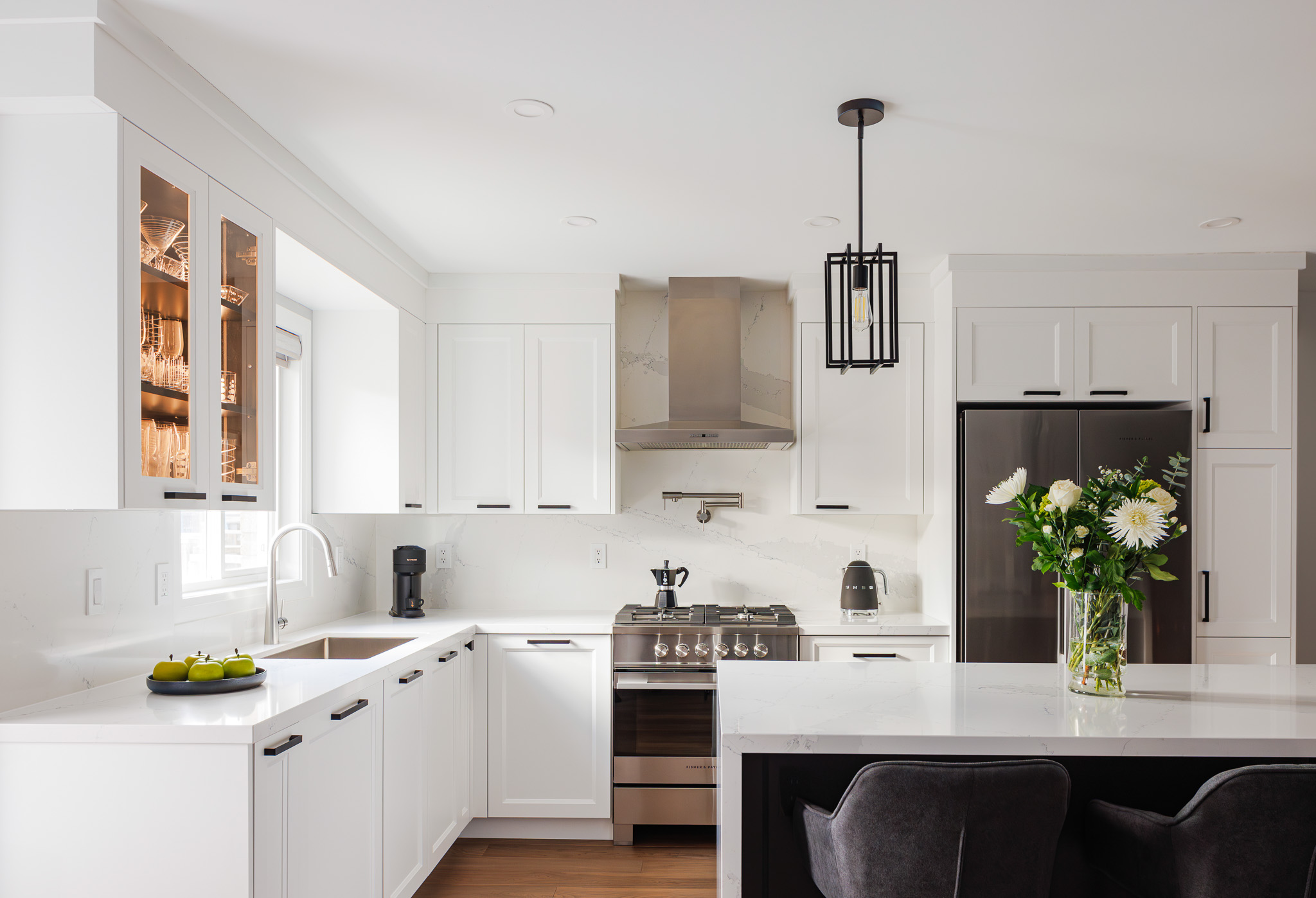
Door style is one of the most visible cost variables in kitchen cabinetry. The classic Shaker door remains the most popular and affordable option, offering clean lines that suit both traditional and contemporary kitchens. Slab doors offer a minimalist, modern aesthetic at a similar price point.
More elaborate designs—raised panels, beaded details, grooved profiles, or inset doors—require additional machining and precision fitting, which increases the cost. Inset cabinetry, where doors sit flush within the cabinet frame, can add 20 to 30 percent to the price compared to a standard full-overlay configuration. Frameless construction (European style) is another premium option that offers a sleek, clean appearance and maximizes interior storage space.
Kitchen Size and Layout
A standard 10 × 10 foot kitchen requires approximately 20 to 25 linear feet of kitchen cabinets. Larger layouts—such as L-shaped, U-shaped, or those with a center island—require more cabinets, more materials, and more labor. A small galley kitchen can cost between $5,000 and $12,000 for cabinets, while a spacious U-shaped kitchen with an island and pantry storage can reach $25,000 to $50,000 or more for custom cabinetry.
Unique architectural features like cathedral ceilings, corner configurations, or irregular wall angles often require custom solutions that increase design complexity and cabinet costs.
Kitchen Cabinet Pricing by Type
The following price ranges reflect 2026 national averages for a standard 10 × 10 foot kitchen, including materials and basic installation.
Standard and Ready-to-Assemble Cabinet Pricing
Standard and ready-to-assemble (RTA) kitchen cabinets are the most budget-friendly options on the market. They are available in predetermined sizes, colors, and styles—typically made of MDF or plywood with laminate or thermofoil finishes. For a standard 10 × 10 foot kitchen, expect to pay between $2,000 and $8,000, including installation. These cabinets are ideal for rental properties, quick renovations, or homeowners who prioritize cost over customization.
Semi-Custom Cabinet Pricing
Semi-custom cabinetry offers an attractive middle ground. You gain access to a wider selection of door styles (Shaker, raised panel, slab), wood species (maple, oak, cherry), and finish options while maintaining some dimensional flexibility. Interior accessories like pull-out trays, drawer dividers, and built-in organizers become available at this level. A semi-custom kitchen cabinet project typically ranges from $5,000 to $15,000 for a standard kitchen.
Custom and Luxury Cabinet Pricing
Custom kitchen cabinets are designed from scratch to fit the exact dimensions, architectural details, and personal aesthetic of your kitchen. This is where craftsmanship, precision engineering, and material quality converge. Expect an investment of $12,000 to $35,000 for a custom kitchen, with luxury-tier projects—featuring solid walnut or quarter-sawn white oak, hand-applied lacquer, dovetail drawer construction, soft-close Blum hardware, and integrated LED lighting—ranging from $25,000 to $50,000 and beyond.
At this level, cabinetry becomes more than just storage. It becomes a functional work of art, tailored to your vision and built to last for generations. Browse the Inspiration Corner to see examples of custom luxury kitchen cabinets in completed spaces.
Ready to explore your options?
Discover the full range of door styles, wood species, and finishes available for your project—from classic Shaker profiles to sleek contemporary designs.
What does professional kitchen cabinet installation include?
Professional kitchen cabinet installation typically costs from $50 to $300 per linear foot or $40 to $80 per hour, depending on complexity and location. A qualified installer ensures precision assembly, leveling, shimming, and alignment of all base cabinets, wall cabinets, and specialty units. The process also includes installing hardware, adjusting doors and drawers, and a final quality inspection to ensure every element functions perfectly.
For custom and luxury cabinetry, installation requires a higher level of expertise. Integrated appliance panels, crown molding, under-cabinet LED lighting, and precision inset doors all require experienced installers who understand the tolerances involved. Reputable custom cabinet makers coordinate installation as part of their service—at Cuisine Idéale, for example, professional on-site installation is the final phase of a comprehensive four-step process.
Additional expenses to anticipate during a kitchen renovation
Beyond the costs of cabinets and labor, several related expenses can influence your total kitchen renovation budget. Demolition and removal of old cabinets typically add $300 to $800. Plumbing and electrical modifications for relocated sinks, dishwashers, or light fixtures can range from $500 to $2,000. Hardware upgrades—high-end handles, knobs, and hinges—cost from $2 to $50 per piece.
Installing crown molding adds $200 to $600, and new countertops (quartz, granite, or marble) represent a separate but significant budget item at $40 to $100 per square foot installed.
How location influences the price of kitchen cabinets
Your place of residence has a measurable impact on the cost of kitchen cabinets. Major metropolitan areas like New York, Los Angeles, Chicago, and San Francisco have labor rates 20 to 50 percent higher than the national average. Material availability and shipping distances also play a role—homeowners in remote or rural areas may face high transport fees for custom or bulky cabinetry.
Regional demand for certain styles and materials also influences prices. Coastal and urban markets tend to favor contemporary frameless cabinetry and natural wood tones, while traditional Shaker and raised-panel designs remain dominant in suburban and Midwest markets. When setting your budget, always obtain multiple quotes from local installers and suppliers to establish an accurate baseline for your region. The NKBA is a valuable resource for finding certified kitchen design professionals in your area.
Get a personalized estimate for your kitchen
Whether you are working with one of our 200+ authorized retailers across the United States or visiting a Cuisine Idéale exclusive showroom in Quebec, our team can provide you with an estimate tailored to your project.
The value of investing in quality kitchen cabinets
How long do kitchen cabinets last?
The lifespan of cabinets varies significantly depending on the quality of construction. Standard, ready-to-assemble cabinets made of particleboard or low-end MDF may last 10 to 15 years before showing signs of warping, delamination, or hardware failure. Semi-custom plywood cabinets with solid wood doors generally last 20 to 30 years. Custom kitchen cabinets built from solid hardwood with dovetail joinery and premium hardware can last 40 years or more—often outlasting all other elements in the kitchen.
Proper maintenance further extends their lifespan: wipe up spills promptly, use soft-close hinges to reduce wear, and apply protective finishes to prevent scratches and moisture damage.
Return on investment for kitchen renovations
Kitchen renovations consistently offer one of the best returns on investment among home improvement projects. According to the 2025 Cost vs. Value report by Zonda and JLCA minor, mid-range kitchen renovation recoups approximately 96 percent of its cost at resale—making it the only interior project to rank in the top five nationally. Major mid-range renovations recoup about 50 percent, while high-end renovations recoup around 38 percent.
As highlighted by theJLC key trends analysis, more complex custom projects offer significant personal value beyond resale metrics—through daily functionality, design satisfaction, and long-term durability. Quality cabinetry in neutral tones, timeless door styles like Shaker, and durable materials appeal broadly to potential buyers and enhance the perceived value of the entire home.
How to budget for your kitchen cabinet project
Start by defining the scope of your renovation. A simple cabinet replacement within the existing footprint costs significantly less than a full kitchen remodel involving layout changes, plumbing relocation, and new electrical work. As a general rule, allocate 40 to 50 percent of your total kitchen renovation budget to cabinetry. Request detailed quotes from at least three qualified installers or cabinet makers. Each estimate should detail materials, hardware, labor, delivery, and any modifications.
A reputable design partner will guide you through options at different price points so you can balance aesthetics, functionality, and investment. Consider scheduling a showroom visit or a request a quote to visualize the completed space before committing to a final design.
Get a personalized estimate for your kitchen
Share your project details and our design team will provide a tailored estimate—no obligation, just a clear vision of what your dream kitchen will cost.
How to save on kitchen cabinets without sacrificing quality
Refacing and refinishing as budget-friendly alternatives
If your existing cabinet boxes are structurally sound, refacing offers a remarkable transformation at a fraction of the cost of a full replacement. The process involves applying a new veneer to the cabinet surfaces and replacing the doors, drawer fronts, and hardware. Refinishing—sanding and applying a new stain or paint—is an even more economical option that can modernize an outdated kitchen for $2,000 to $6,000.
Choosing the right wood species for your budget
Choosing the wood species is one of the most impactful levers for controlling cabinet costs without compromising quality. Maple and red oak offer exceptional durability, beautiful grain patterns, and take stain beautifully—all at a lower price point than walnut or white oak. If you love the look of a high-end wood but need to manage your investment, a skilled cabinet maker can often achieve a similar aesthetic through expert staining techniques on a more affordable species. Explore the full range of materials and collections to compare options.
Working with a design professional to maximize value
A qualified kitchen designer or cabinetry specialist can help you avoid costly mistakes. They optimize your layout for maximum storage and functionality, recommend combinations of materials and finishes that align with your budget, and prevent over-ordering or under-specifying. The National Kitchen & Bath Association (NKBA) maintains a directory of certified professionals, and the cost of a consultation is generally recouped many times over through smarter purchasing decisions and a cohesive design that adds lasting value to your home.
What to expect when working with a custom cabinet maker
The design and manufacturing process
Working with a custom cabinet maker begins with an in-depth analysis of your needs, lifestyle, and aesthetic preferences. The design phase typically includes precise measurements, detailed floor plans, and immersive 3D renderings that allow you to visualize every cabinet, finish, and hardware selection before manufacturing begins. This collaborative process ensures that every detail—from drawer configuration to crown molding profiles—reflects your personal vision. Manufacturing takes place in specialized workshops where master cabinetmakers combine traditional woodworking techniques with modern precision technology. Each component is crafted to exact specifications, inspected for quality, and prepared for delivery. At Cuisine Idéale, this process unfolds across four key phases—from analysis and planning to custom installation—with over 250,000 luxury cabinets delivered since 1971.
Manufacturing, delivery, and installation timelines
Custom cabinetry requires a longer lead time than standard or semi-custom options. Expect 8 to 16 weeks between design approval and delivery, depending on complexity, material availability, and the manufacturer's production schedule. Delivery is coordinated according to your renovation timeline, and professional installation ensures that every cabinet is mounted, leveled, and adjusted to rigorous standards.
Questions to ask before choosing a cabinetry partner
Before committing to a cabinet maker or retailer, inquire about construction methods (plywood vs. particleboard boxes, dovetail vs. stapled drawers), available wood species and finish options, warranty coverage, and the experience of the installation team. Ask to see completed projects or visit a showroom showroom to evaluate the quality firsthand. A trusted partner will provide transparent pricing, a detailed schedule, and a clear process from the initial consultation to the final installation.
Tendances & conseils
Nos dernières inspirations
Découvrez les plus récents articles de Cuisine Idéale : tendances émergentes, conseils de designers, projets inspirants et idées pour imaginer des espaces qui vous ressemblent.
Discover
10 January’2024
An architect's perspective on design and construction.
Discover
10 January’2024
Architectural ideas, developments, and motivation.
Discover
10 January’2024
The modern architecture art of design and structure.