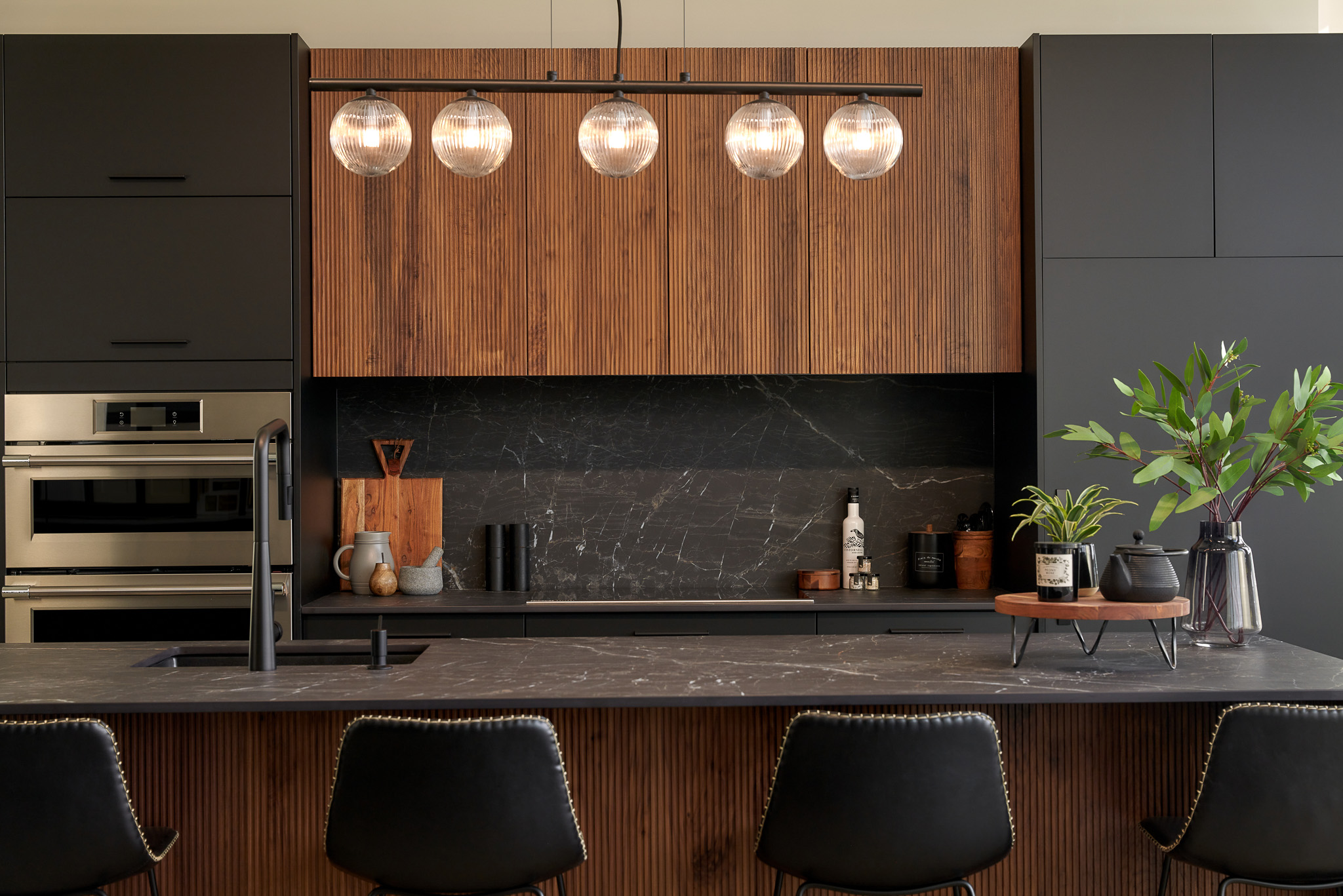
A well-organized kitchen changes the way you cook, clean, and live your daily life. Yet, cluttered cabinets remain one of the most common frustrations for homeowners: spices lost behind expired canned goods, pots stacked so precariously that pulling one out shifts three others, and drawers so packed that nothing slides the way it should.
The good news is that learning how to organize kitchen cabinets and drawers doesn't require a full renovation or a professional organizer. With a methodical plan, the right tools, and a few principles borrowed from the world of custom kitchen cabinetry, you can turn even the most chaotic storage into a functional and efficient organizational system.
This guide walks you through every step and shares insights from experts with over fifty years of experience designing kitchens built for lasting order.
Why kitchen cabinet organization matters more than you think
Organizing your kitchen cabinets goes far beyond aesthetics. When every item has a logical home, meal prep becomes faster, cleanup requires less effort, and you reduce waste by avoiding duplicate purchases. A disorganized kitchen, on the other hand, creates daily friction—small frustrations that add up and cost you precious time.
How cluttered cabinets waste time, space, and money
Think about the time you spend searching for a specific lid, digging through a crowded pantry to find the right spice, or taking everything out of a deep cabinet just to reach what’s in the back. Even small inefficiencies in how you categorize and store items multiply over thousands of meals. Cluttered cabinets also hide expired food, encourage duplicate purchases, and make it difficult to maximize storage space—all factors that waste money.
The link between cabinet design and sustainable organization
Here is what most organization guides overlook: the cabinets themselves play a decisive role in how easy they are to keep organized. Stock cabinets with fixed shelves, shallow drawers, and no interior fittings force homeowners to rely entirely on after-market organizers. Custom cabinets, however, can solve organizational challenges at the source with adjustable shelf heights, full-extension drawers that reveal their entire contents, integrated lighting for visibility, and precision compartments naturally aligned with your kitchen zones. Organization is easier when the cabinet was designed for it from the start.
Step 1 — Empty, declutter, and clean every cabinet
Before you can organize, you need to see what you are working with. The most effective first step is to completely empty every cabinet and drawer. This approach may seem overwhelming at first, but it gives you a true picture of your inventory and allows you to start with a clean slate.
What to keep, donate, and toss from your kitchen cabinets
Sort every item into three groups: keep, donate, and toss. Be honest—if you haven't used a gadget, serving dish, or specialty pan in the last six months, that item is taking up valuable storage space. Expired food goes straight to the trash. Chipped plates, lids without containers, and duplicate utensils are perfect candidates for donation. Sorting by category at this stage also helps you see exactly how many of each type you own. The fewer items competing for shelf space, the easier every subsequent step becomes. If you are clearing out responsibly, think about how you can reduce your environmental impact in the kitchen by recycling and donating rather than sending everything to a landfill.
How to clean the inside of your cabinets before reorganizing
Once the cabinets are empty, vacuum up any crumbs and debris, then wipe down all interior surfaces with a soft cloth and a mild soap solution. Pay special attention to corners and shelf edges where grease and dust tend to accumulate. For stubborn residue, a paste of baking soda and water works well without damaging wood or laminate finishes. Once clean, consider adding non-adhesive shelf liners to protect the surfaces. This is also the perfect time to inspect hinges, shelf supports, and hardware—tighten anything that’s loose before reloading.
Step 2 — Organize your kitchen cabinets by zone
The most effective organization strategy is zone-based storage — grouping items by activity rather than by type. Instead of scattering baking supplies across four different cabinets, you keep everything you need in one dedicated area. This approach mimics how professional kitchens operate and significantly reduces the distance between reaching for an item and using it.
Defining activity zones for an efficient kitchen workflow
Start by identifying three to five activity zones based on how you actually use your kitchen:
- Cooking zone — pots, pans, cookware, oils, and spices stored near the stove
- Prep zone — cutting boards, mixing bowls, measuring cups, and knives near your main workspace
- Storage zone — pantry items, airtight containers, and dry bulk goods in a central cabinet or pull-out pantry
- Cleaning zone — dish soap, sponges, trash bags, and cleaning supplies grouped under the sink
- Beverage zone — mugs, glasses, coffee, and tea near the kettle or coffee maker
You could also set up a specialized area like a dedicated coffee barThe key is to match your workflow to your cabinet layout; items you use together should live together. Organizing by frequency of use ensures your most-reached-for items are at the most accessible shelf height, while seasonal and rarely used pieces occupy the higher or deeper shelves.
What to store in upper cabinets, lower cabinets, and drawers
- Upper cabinets — ideal for everyday items you grab often: glasses, plates, bowls, and common pantry staples. Place these on the lower shelves within easy reach and reserve the upper shelves for infrequently used items like holiday dinnerware.
- Lower cabinets — should house heavy items: cast-iron skillets, stand mixers, large pots, and baking pans. Storing heavy items down low keeps them secure and easy to access without overhead lifting. Corner cabinets work best with a lazy Susan to prevent items from disappearing into inaccessible depths.
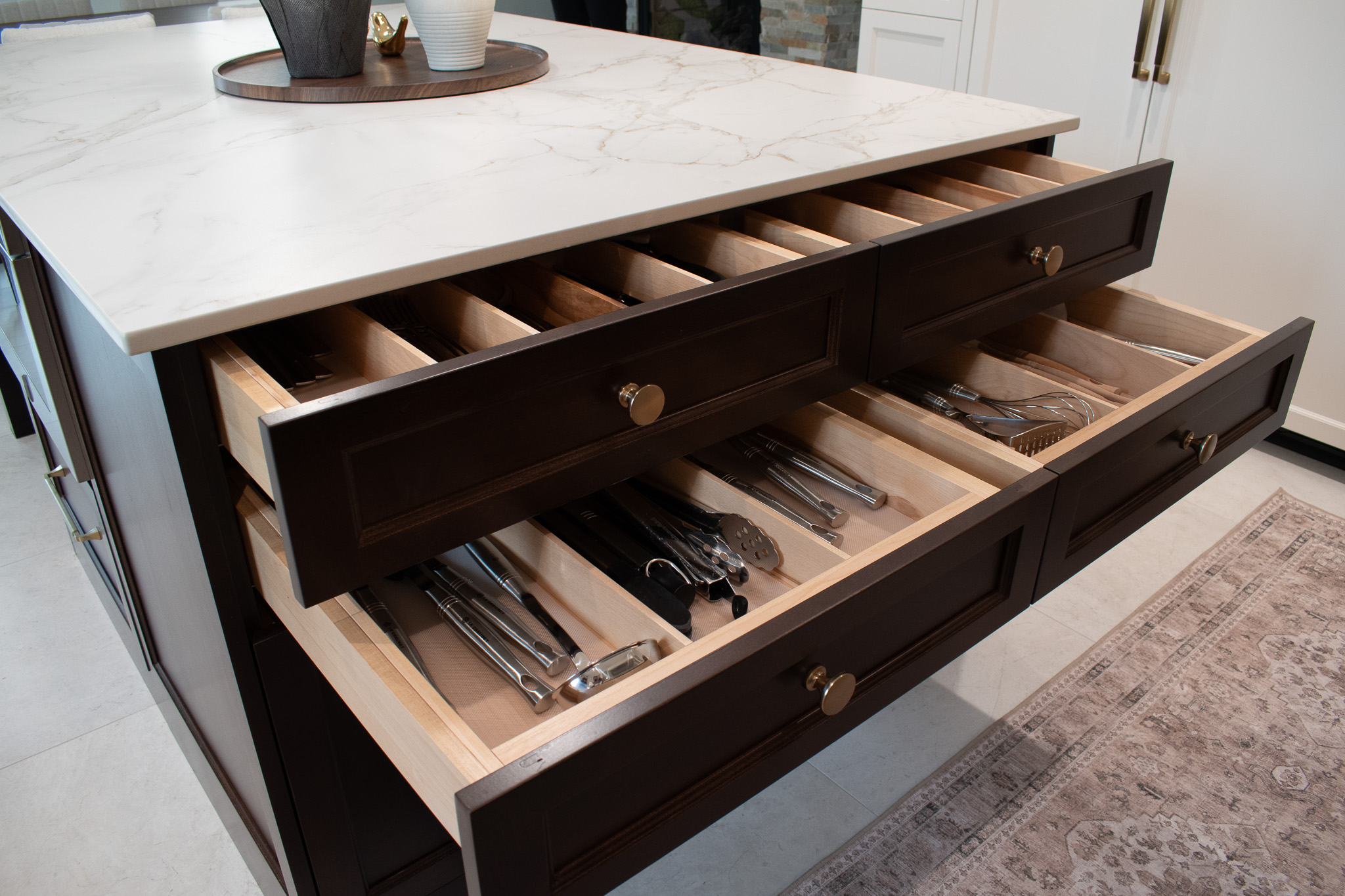
- Drawers — the most accessible storage in any kitchen. Wide, deep drawers are excellent for pots and pans when equipped with dividers, while shallow drawers near the prep area keep utensils, measuring tools, and cutlery neatly organized. Full-extension slides allow you to see and reach everything, even items stored at the very back.
Start your custom kitchen project with Cuisine Idéale
Want to design cabinets that make organization effortless from the start? Our team turns your vision into a functional, precision-crafted kitchen tailored to the way you cook, store, and live. Visit a Cuisine Idéale showroom to discover the difference that custom cabinetry can make.
Start your project
Step 3 — Maximizing storage in corner cabinets, deep cabinets, and small kitchens
Certain cabinet configurations present unique organizational challenges. Corner cabinets, deep base cabinets, and compact kitchens all require targeted solutions to avoid wasted space and lost items.
Solutions for corner cabinets: lazy Susans, pull-out shelves, and swing-out racks
Corner cabinets are notorious for swallowing items into their depths. The most effective solution is a lazy Susan, which brings the contents from the back to the front with a simple spin. For blind corner cabinets, pull-out shelf systems on glides provide access to the full depth without having to reach in blindly. A third option is to reserve corner cabinets for bulky, rarely used items—large serving platters, holiday cookware, or bulk paper products.
How to organize deep kitchen cabinets with full-extension drawers
Deep base cabinets are the second most common problem. Items pushed to the back become invisible and forgotten, leading to expired food and wasted space. The most effective upgrade is to replace fixed shelves with full-extension drawer slides that bring all the contents to the front. Storing small items in stackable bins or clear containers also helps; group similar items in labeled containers so you can pull out one bin without having to take everything apart. Shelf risers double your vertical storage in deep cabinets by creating a second level.
Space-Saving Storage Ideas for Small Kitchens
In a small kitchen with limited storage space, every inch counts. Maximize vertical space by adding shelf risers inside cabinets and hooks under shelves for mugs and lightweight items. Use the inside of cabinet doors for mounted racks to hold spice jars, aluminum foil, or cleaning supplies. Nest mixing bowls and stack pots inside one another. The contemporary door styles such as flat-panel or shaker profiles also help small kitchens look more open by reducing visual clutter. Above all, in a compact kitchen, ruthless decluttering is your most powerful tool for maximizing space.
Step 4 — Organizing Kitchen Drawers and Cabinet Accessories
With your main cabinet zones established and common issues resolved, the final layer of organization involves choosing the right accessories and organizers to keep everything in its place, day after day.
Drawer Dividers, Shelf Risers, and Bins: Choosing the Right Organizers
The right organizer depends on what you are storing and where:
- Drawer dividers — keep utensils, cutlery, and tools separated; adjustable versions adapt as your collection grows
- Shelf risers — create a second level inside cabinets for plates, mugs, or canned goods
- Clear bins and storage boxes — group small pantry items or cleaning supplies so you can grab an entire category at once
- Lid organizers — solve one of the most persistent kitchen frustrations by storing lids vertically rather than stacked flat
- Spice racks and pull-out inserts keep seasonings visible and within reach while you cook
- Peg drawer inserts — keep plates upright with adjustable pegs that can be reconfigured as needed
Built-in organizers like a custom maple drawer divider crafted from the same wood as your cabinets offer a more refined and permanent solution than store-bought plastic inserts. When the organizer is designed alongside the cabinet, it fits perfectly and elevates the entire experience.
How integrated LED lighting and soft-close hardware improve accessibility
Two features that significantly improve the functionality of cabinets and drawers are often overlooked in discussions about organization. Integrated LED lighting inside cabinets and drawers eliminates shadows, making it easy to see the contents at a glance—especially in deep cabinets, under the sink, and in pantries. When you see everything clearly, you naturally maintain better organization because nothing gets hidden in dark corners.
Soft-close hardware protects both your cabinets and their contents. Doors and drawers that close gently, without slamming, prevent items from shifting every time a cabinet is closed. Combined with full-extension slides, soft-close keeps your organization system stable for years to come. Discover how integrated lighting transforms kitchen functionality and how illuminated drawer systems bring visibility to every compartment.
Explore Cuisine Idéale precision drawer systems
Our AvanTech YOU drawer systems combine full-extension slides, soft-close technology, and dovetail construction into a system designed for decades of flawless performance. Every drawer opens fully, closes silently, and reveals its entire contents—because organization should never require compromise.
Explore our products
How to keep your kitchen cabinets organized long-term
Organizing your kitchen cabinets is a project. Keeping them organized is a habit. The difference between a kitchen that stays functional and one that falls back into chaos within a few months comes down to maintenance routines and, in some cases, addressing the root cause of persistent disorganization.
A seasonal maintenance routine for organized cabinets
Schedule a quarterly reminder for a quick cabinet audit. Every three months, set aside thirty minutes to:
- Check expiration dates on pantry items and spices; place the oldest ones in front using the first-in, first-out principle.
- Remove items that have migrated out of their designated zones.
- Declutter anything that has accumulated, such as promotional mugs, single-use gadgets, or duplicate containers.
- Wipe down shelves and liners to prevent the buildup of grease and dust.
- Tighten hardware ; loose hinges and shelf supports cause doors and shelves to sag over time.
This seasonal routine requires minimal effort but prevents a gradual return to disorder. For visual inspiration, browse our real kitchen projects and see how well-designed cabinetry maintains its beauty through years of daily use.
When it’s time to level up: how custom cabinetry solves organization at the source
If you find yourself constantly battling the same organizational issues—cabinets that are too shallow for your pots, drawers that don’t open fully, or fixed-height shelves that waste vertical space—the problem might not be your organizational skills. It might be your cabinets.
Custom cabinetry designed around your specific workflow eliminates those compromises. Every shelf height, drawer depth, and interior compartment is tailored to your needs. Features like precision drawer systems, integrated dividers, and lighting are planned from the start, not added as an afterthought. When the cabinetry itself is the solution, staying organized becomes effortless. Curious about the investment? Here is a guide on thecost of kitchen cabinets to help you plan.
Discuss your kitchen vision with our design team
Whether you are renovating an existing kitchen or building from scratch, the Cuisine Idéale design team will create a kitchen where every cabinet, drawer, and shelf is designed for the way you live. Since 1971, we have delivered over 250,000 luxury cabinets across North America, each crafted in our Quebec workshops with precision and passion.
Start your custom journey